Is there sargassum in St Martin? When the seaweed arrives, which coast it hits, and how to read the Météo-France forecast before you pick a beach.
Sargassum seaweed is one of the first things people ask about before a Caribbean trip. Here is what Météo-France and the Collectivité of Saint-Martin, the local government on the French side, say about it, and how to check what to expect the day before a beach day or a ride on the water.
Is there sargassum in St Martin?
Yes, in some years and some weeks. According to Météo-France, the French Caribbean islands have seen massive sargassum landings since 2011, and St Martin and St Barts have had a lot of it in recent seasons. But it changes from week to week and from one coast to another, so the smart move is to check the official forecast before choosing your beach.
What is sargassum?
It is a brown seaweed that floats in large mats out in the Atlantic. Currents and the trade winds push it toward the shore. Météo-France notes that once it washes up, it covers the beaches and gives off toxic gases as it rots, so it is best not to linger near the piles.
When is sargassum season in St Martin?
There is no fixed date, only a pattern. According to Météo-France, landings are more frequent in the dry season, especially in April and May, and the seaweed builds up most off St Martin and St Barts between May and July. During the rainy season, roughly July to November, an Atlantic current called the North Equatorial Countercurrent carries part of the seaweed back toward West Africa. That lowers the risk without removing it, and a new cycle starts around the end of the year.
Recent seasons have been heavy. Météo-France ranked 2025 as the biggest year for detected seaweed since 2011, with a season of about 26 weeks, from mid March to mid September, and landings until the end of the year. In 2026, the amounts detected off St Martin and St Barts broke records as early as May.
Which beaches get the most sargassum?
Mostly beaches on the east coast, which faces the Atlantic. The Collectivité lists the east coast, Cul de Sac bay and the Étang aux Poissons among the affected areas, and named the north end of Orient Bay as the hardest hit in 2025. The tourist office also notes that the wild beach of Grandes Cayes, facing Tintamarre, is sometimes affected.
No coast is guaranteed to stay clear, though: it all depends on the week's currents and wind.
How do you read the St Martin sargassum report?
Météo-France Guadeloupe publishes a sargassum landing forecast for St Martin and St Barts on meteofrance.gp, under Sargasses, Iles du Nord. It is dated and covers the next four days. Since July 2026, it fits on a single map:
- A color code along the coast shows the landing risk on four levels: no sargassum, low, moderate, high.
- Satellite detections from the past three days and the ocean currents show where the seaweed is coming from.
- A wind table for the next four days gives its direction and strength, which matter a lot in the last few miles before the shore.
- A 15 day chart shows where the current week sits in the season.
Météo-France warns that clouds can hide part of the area from the satellites, and that the report does not measure how much seaweed will wash up. It is a trend, not a promise.
What about a jet ski tour?
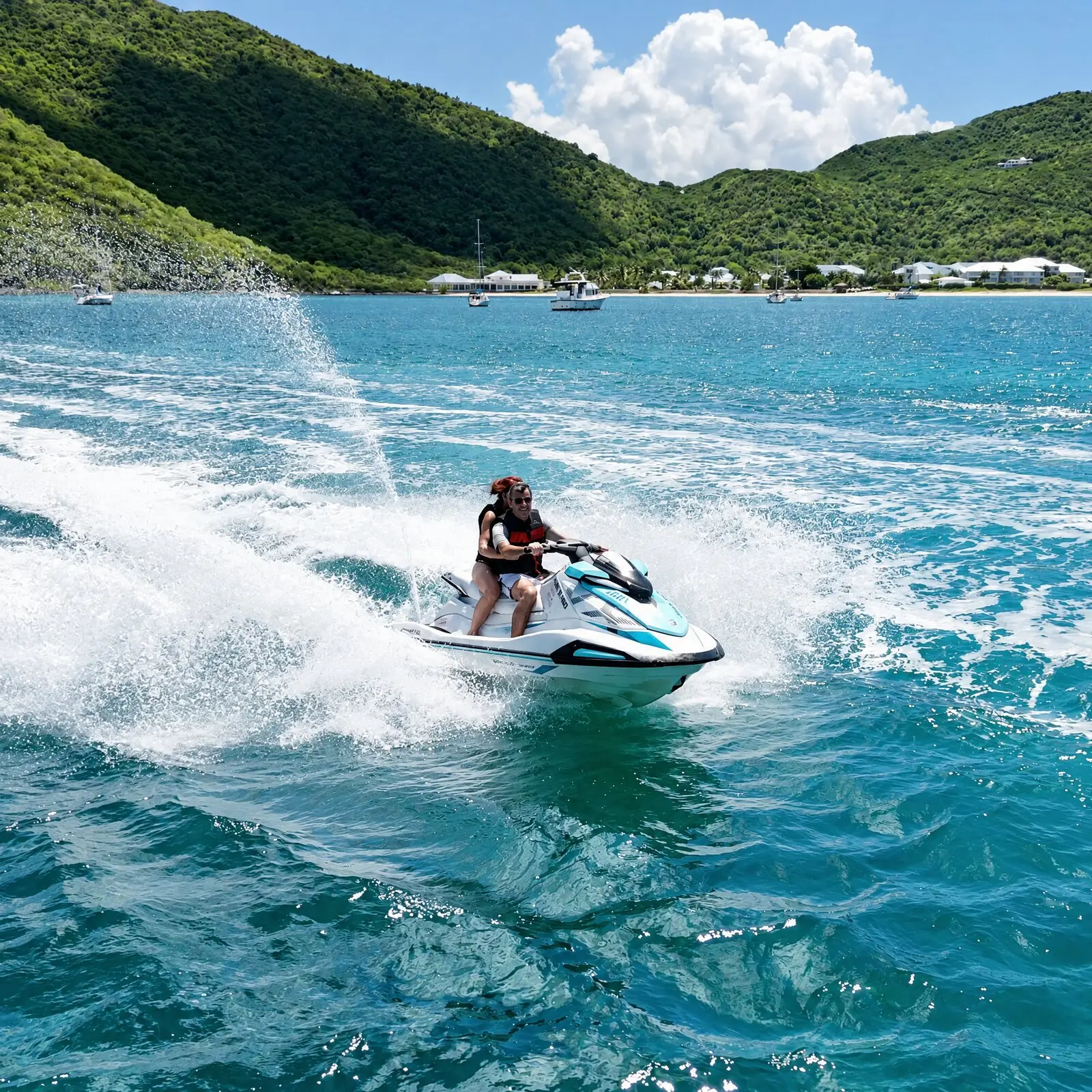
All seven of our tours leave from Marina Royale in Marigot, on the French side, with a guide from start to finish. Several of them stay well away from the east coast named in the official reports:
- the Lagoon Trip, 45 minutes on the calm water of Simpson Bay Lagoon, sheltered from the open sea;
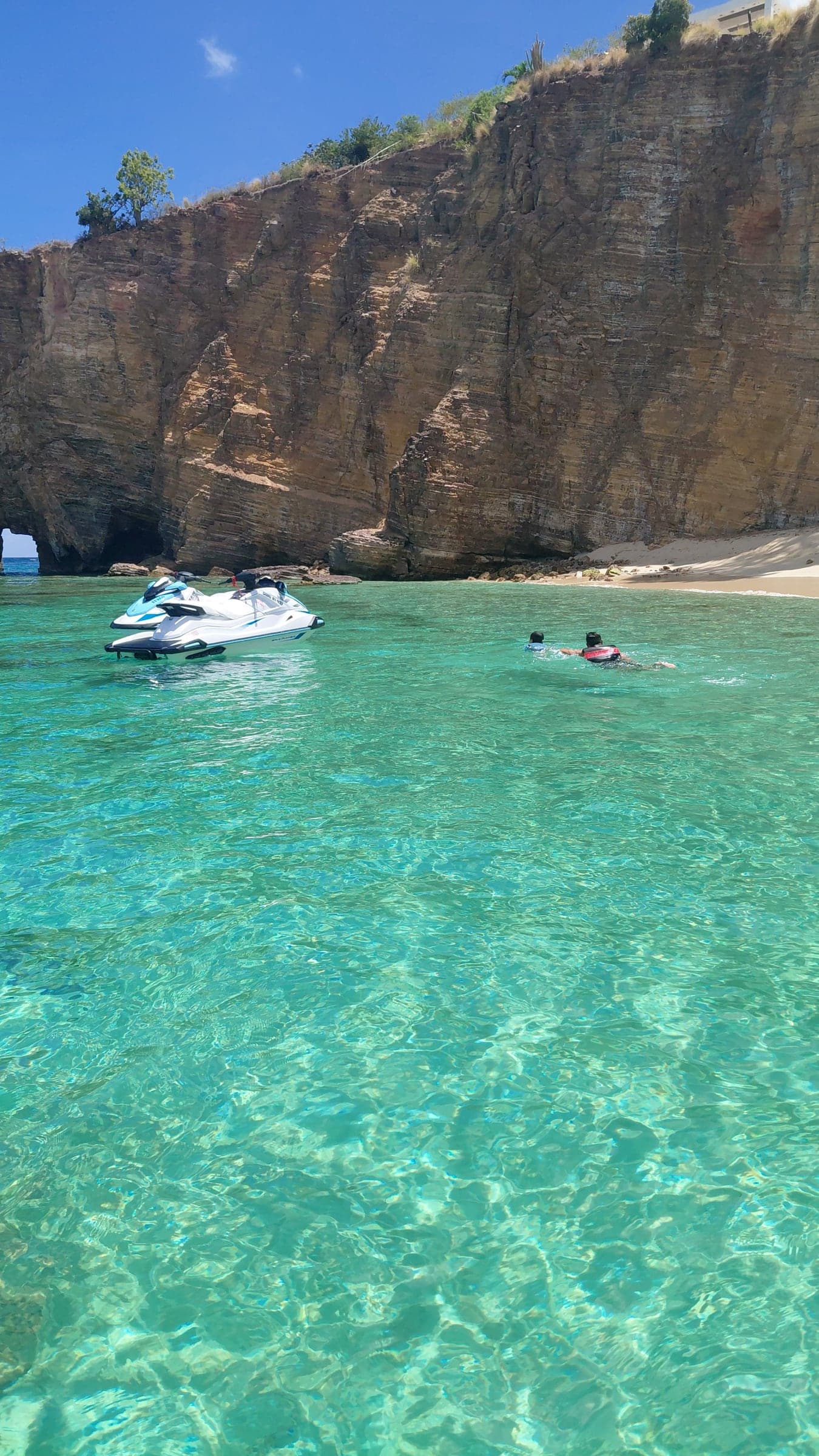
- the Terres Basses tour, 1 h 30 along the cliffs, villas and beaches of the west side of the island;
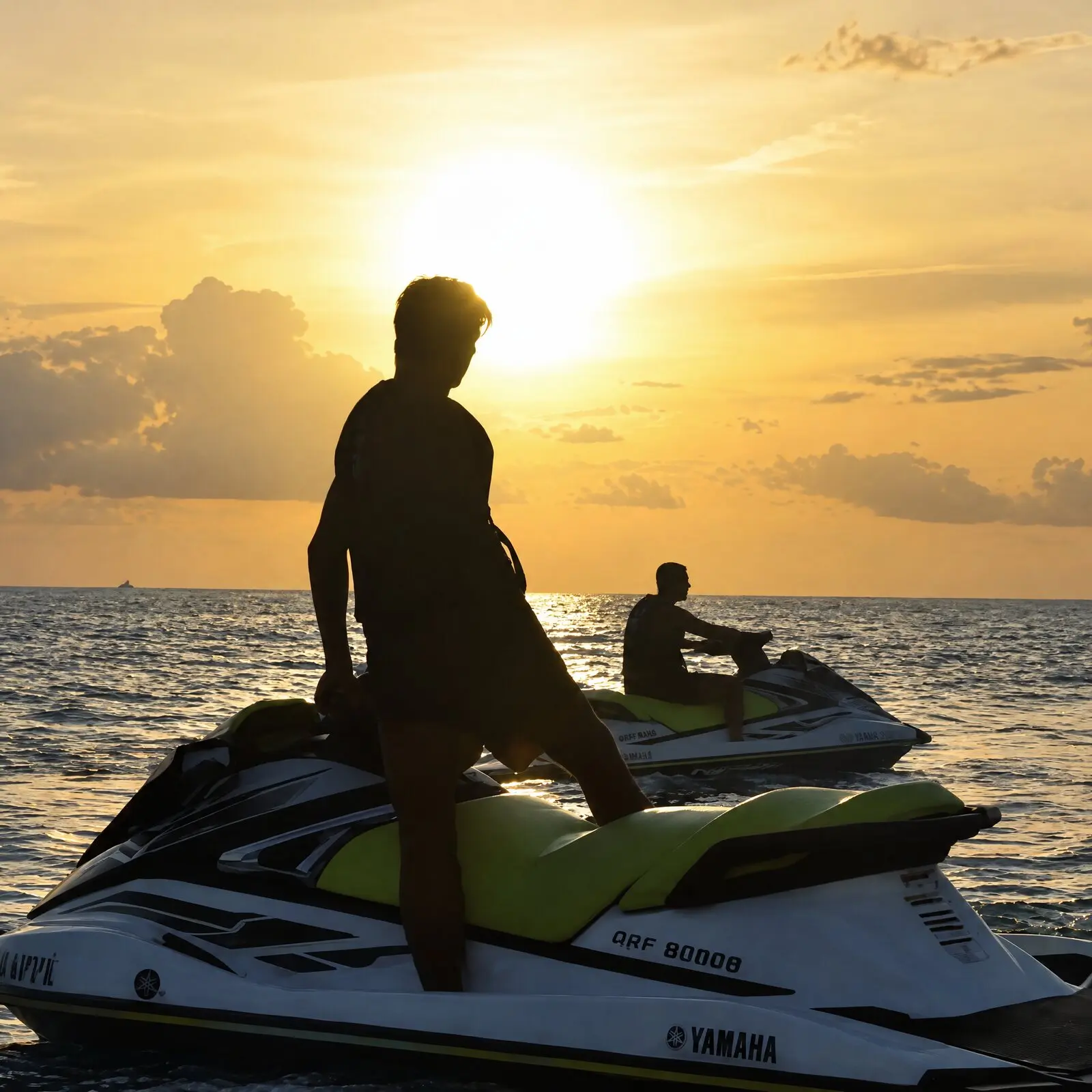
- the Sunset Dream, the sunset from the sea, off the Terres Basses coast;
- the 747 Tour, one hour out to Maho Beach to watch the planes land at Princess Juliana airport.
To pick your dates, our guide to the best time to visit St Martin goes season by season, and our list of the best beaches in St Martin covers the beaches coast by coast.
The short version
Sargassum mostly hits the Atlantic side, more often in spring and early summer, and it changes from week to week. A quick look at the Météo-France report the day before is enough to choose your beach. We are open every day from 9 am to 6 pm: pick your tour and book your jet ski in Marigot.